
Introduction: Banking and Financial Services in Bangladesh
Understanding the banking and financial services in Bangladesh is essential for investors, businesses, and anyone interested in the economic landscape of this rapidly growing South Asian nation. Bangladesh’s financial sector has undergone remarkable transformation over the past five decades, evolving from a nascent system at independence in 1971 to a diverse, multi-layered ecosystem that now serves over 165 million people.
The banking and financial services in Bangladesh play a crucial role in the country’s economic development, facilitating domestic and international trade, mobilizing savings, allocating credit, and enabling the digital economy that’s transforming how Bangladeshis conduct financial transactions. The sector encompasses traditional commercial banks, Islamic banking institutions, specialized banks, non-bank financial institutions, microfinance organizations, and increasingly sophisticated capital markets.
This overview of Bangladesh’s banking and financial services sector will explore how the system is structured, the key players shaping the industry, regulatory frameworks ensuring stability, emerging trends like digital banking, and the future trajectory of financial services in one of Asia’s fastest-growing economies. Whether you’re considering investment opportunities, planning business operations in Bangladesh, or simply seeking to understand how this vital sector functions, this comprehensive guide provides the insights you need.
Structure of the Banking System in Bangladesh
The structure of the banking system in Bangladesh follows a multi-tiered framework designed to serve different economic needs while maintaining regulatory oversight and financial stability. Understanding this structure is fundamental to comprehending how financial services operate in the country.
Regulatory Hierarchy:
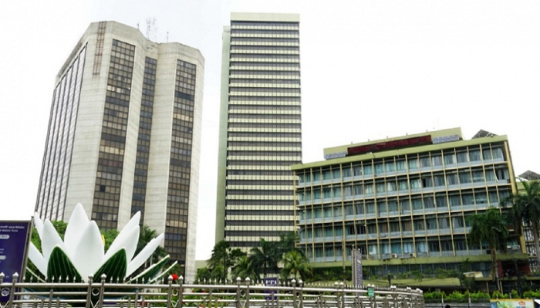
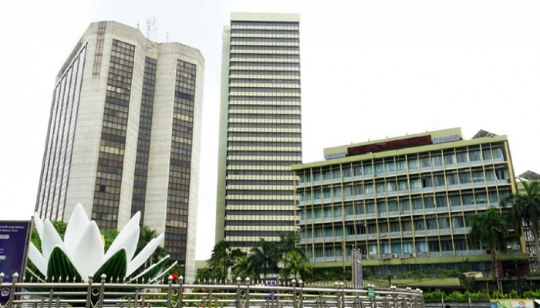
At the apex sits Bangladesh Bank, the central bank that regulates and supervises all banking activities. Below this regulatory authority, the banking system branches into several categories, each serving specific functions within the broader financial ecosystem.
Categories of Banks:
State-Owned Commercial Banks (SCBs): These government-owned institutions were nationalized after independence and continue to play significant roles, particularly in rural banking and agricultural finance. Currently, six state-owned commercial banks operate in Bangladesh, holding substantial market share despite competition from private institutions.
Specialized Banks: Five specialized banks focus on specific sectors—agriculture, industry, and housing. These institutions address particular economic development needs that general commercial banks may underserve.
Private Commercial Banks (PCBs): This category has experienced the most dramatic growth, now comprising over 40 conventional and Islamic banks. Private banks drive innovation, offer diverse products, and increasingly dominate the retail banking market.
Foreign Commercial Banks: Nine foreign banks operate in Bangladesh, bringing international banking expertise, facilitating foreign trade and investment, and offering specialized services to multinational corporations and high-net-worth individuals.
Development Financial Institutions: These specialized institutions support long-term development projects and industries requiring patient capital unavailable from commercial sources.
Operational Structure:
The banking system in Bangladesh operates through extensive branch networks. As of 2024, approximately 11,000 bank branches serve the country, though distribution remains uneven with urban concentration far exceeding rural coverage. However, agent banking and mobile financial services are rapidly expanding financial access to previously underserved areas.
Key Characteristics:
The structure reflects several distinctive features: dual banking system offering both conventional and Islamic banking services, significant state presence alongside vibrant private sector, branch-based operations supplemented by growing digital channels, and regulatory frameworks balancing stability with innovation.
Challenges Within the Structure:
The multi-layered structure faces challenges including state bank inefficiencies and non-performing loans, varying service quality across bank categories, technological gaps between leading and lagging institutions, and coordination challenges among numerous players.
Understanding this structure helps stakeholders navigate Bangladesh’s banking landscape, recognizing which institutions best serve specific needs—whether agricultural financing, corporate banking, Islamic financial services, or digital payment solutions.
Role of Bangladesh Bank
The role of Bangladesh Bank extends far beyond simple monetary policy, encompassing comprehensive regulatory, supervisory, and developmental functions that shape the entire financial sector. Established in 1971 following independence, Bangladesh Bank serves as the central bank and primary financial regulator.
Core Functions:
Monetary Policy Management: Bangladesh Bank formulates and implements monetary policy to maintain price stability, manage inflation, and support economic growth. The bank uses various tools including repo rates, cash reserve ratios, and statutory liquidity ratios to influence money supply and credit conditions.
Currency Issuance and Management: As the sole authority for issuing currency, Bangladesh Bank manages the design, production, distribution, and destruction of banknotes and coins. The bank continuously works to improve currency security features while ensuring adequate supply throughout the economy.
Banking Regulation and Supervision: Perhaps the most critical function, Bangladesh Bank licenses, regulates, and supervises all banks and financial institutions. This includes setting capital adequacy requirements, conducting regular inspections, monitoring asset quality, and enforcing compliance with banking laws and regulations.
Foreign Exchange Management: The central bank manages foreign exchange reserves, regulates foreign exchange transactions, and intervenes in currency markets to maintain exchange rate stability. Bangladesh Bank also oversees foreign investment flows and external debt management.
Payment Systems Oversight: Bangladesh Bank operates and supervises the national payment system, including the real-time gross settlement system (RTGS), Bangladesh Electronic Funds Transfer Network (BEFTN), and increasingly, digital payment platforms ensuring safe, efficient fund transfers.
Financial Inclusion Initiatives:
Bangladesh Bank has championed financial inclusion through several landmark initiatives:
Agent Banking: Regulations permitting banks to offer services through agents have expanded banking access in rural and underserved areas where branch operations remain uneconomical.
Mobile Financial Services: The bank’s regulatory framework enabled mobile banking services like bKash, Nagad, and Rocket, which have revolutionized financial access for millions of previously unbanked Bangladeshis.
School Banking: Programs encouraging students to open bank accounts foster savings habits and financial literacy from young ages.
SME and Agricultural Finance: Directed credit programs and refinancing schemes ensure adequate financing flows to critical sectors often underserved by commercial considerations alone.
Recent Regulatory Developments:
Bangladesh Bank has modernized regulations to address contemporary challenges:
- Strengthened capital adequacy requirements aligning with Basel III standards
- Enhanced corporate governance requirements for banks
- Stricter loan classification and provisioning rules
- Digital banking guidelines enabling fintech innovation while managing risks
- Environmental and social risk management guidelines promoting sustainable finance
Challenges and Criticisms:
Despite significant achievements, Bangladesh Bank faces ongoing challenges including managing high non-performing loans in state banks, balancing financial innovation with stability concerns, addressing cybersecurity threats, and maintaining independence from political pressures affecting banking decisions.
The role of Bangladesh Bank remains central to financial sector development, requiring continuous adaptation to technological changes, global regulatory standards, and Bangladesh’s evolving economic needs.

State-Owned Commercial Banks
State-owned commercial banks in Bangladesh represent a complex legacy of the country’s post-independence economic strategy. These institutions hold historical significance and substantial market presence while facing persistent challenges that have prompted ongoing reform debates.
The Six State-Owned Banks:
- Sonali Bank Limited – The largest state-owned bank and formerly the largest bank overall in Bangladesh, with the most extensive branch network
- Janata Bank Limited – Second-largest state bank, strong presence in trade finance
- Agrani Bank Limited – Significant rural presence, focus on agricultural financing
- Rupali Bank Limited – Smallest of the four major state banks
- Bangladesh Development Bank Limited (BDBL) – Specialized in industrial financing
- BASIC Bank Limited – Focused on small industries and cottage industries
Historical Context:
Following independence in 1971, Bangladesh nationalized all banks except foreign institutions, creating a state-dominated banking sector. While partial privatization occurred later, state banks retained dominant positions for decades. This heritage continues influencing their operations, culture, and challenges.
Market Position:
Collectively, state-owned commercial banks control approximately 25-30% of total banking sector assets, though this share has declined as private banks have grown. Their extensive branch networks—particularly in rural areas—give them geographic reach private banks struggle to match economically.
Strengths:
Geographic Coverage: State banks maintain branches in remote areas where private banks find operations unprofitable, supporting financial inclusion and rural development.
Agricultural Finance: These institutions provide substantial agricultural credit, understanding rural economies and seasonal financing needs.
Government Banking: State banks handle significant government transactions, salary disbursements, and pension payments.
Public Confidence: Despite problems, many rural customers trust state banks, viewing them as more stable than private alternatives.
Persistent Challenges:
Non-Performing Loans (NPLs): State banks suffer from high NPL ratios, sometimes exceeding 20-30%, compared to 5-10% in better-managed private banks. Political interference, poor credit appraisal, weak recovery mechanisms, and willful defaults contribute to this crisis.
Operational Inefficiencies: Overstaffing, outdated technology, bureaucratic procedures, and poor management create inefficiencies that reduce profitability and competitiveness.
Capital Shortfalls: Chronic losses deplete capital, requiring repeated government recapitalization that strains public finances. Between 2010-2024, the government injected thousands of crores of taka to maintain state banks’ regulatory capital requirements.
Governance Issues: Political appointments to boards and management positions, pressure to approve loans for politically connected borrowers, and limited accountability mechanisms undermine sound banking practices.
Service Quality: Generally, state banks lag private competitors in customer service, technology adoption, product innovation, and operational efficiency.
Reform Initiatives:
Various reform programs have attempted to improve state bank performance:
- Merger discussions to consolidate operations and reduce inefficiencies
- Professional management appointments
- Technology upgrades and digital banking initiatives
- Stricter NPL recovery efforts
- Improved training programs for staff
- Corporate governance reforms
Results have been mixed, with reforms often stalling due to political resistance, institutional inertia, and vested interests benefiting from the status quo.
Future Prospects:
The future of state-owned commercial banks remains debated. Options discussed include further privatization, merger and consolidation, enhanced autonomy with professional management, specialized roles focusing on development banking, or maintaining status quo with incremental improvements.
Despite challenges, state banks continue playing important roles in financial inclusion, agricultural development, and serving segments private banks neglect. Successful reform balancing commercial viability with social objectives remains a key priority for Bangladesh’s financial sector development.
Private Commercial Banks in Bangladesh
Private commercial banks in Bangladesh represent the dynamic, innovative segment of the banking sector, driving competition, technological advancement, and service quality improvements. Since the government permitted private banks in the 1980s, this category has grown to dominate retail banking and corporate finance.
Growth and Development:
The private banking sector began with a few banks in the 1980s and has expanded to over 40 institutions, including both conventional and Islamic banks. This growth reflects Bangladesh’s economic liberalization and recognition that private sector efficiency and innovation could complement state banking.
Categories of Private Banks:
First-Generation Banks (1980s): Established institutions like Pubali Bank, Uttara Bank, and National Bank have decades of experience, extensive networks, and established reputations.
Second-Generation Banks (1990s-2000s): Banks like BRAC Bank, Eastern Bank, Mutual Trust Bank, and Prime Bank emerged during this period, bringing modern banking practices and technology focus.
Third-Generation Banks (2010s): Newer entrants including Meghna Bank, Farmers Bank (later merged), and others attempted to carve niches, though some faced challenges establishing viable operations.
Fourth-Generation Banks (Approved): Recent licenses for several new banks reflect continuing demand, though concerns about over-banking have led to more cautious licensing.
Leading Private Banks:
Several private banks have emerged as industry leaders:
BRAC Bank: Known for SME focus, strong retail presence, and social mission aligning with BRAC’s development philosophy.
Eastern Bank Limited (EBL): Reputation for professional management, technology leadership, and quality customer service.
Dutch-Bangla Bank: Pioneer in technology adoption, operating the country’s largest ATM network and driving mobile/internet banking.
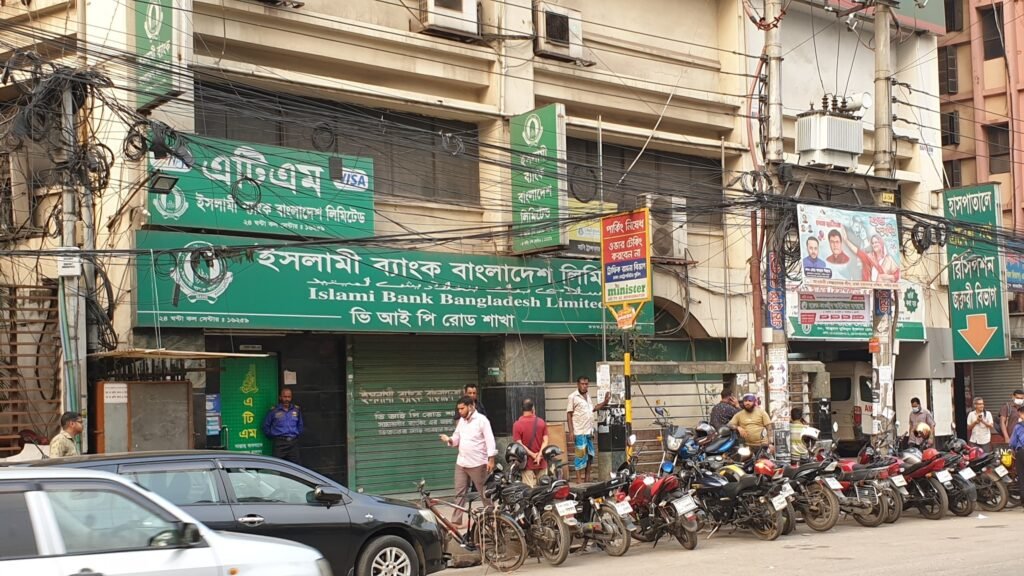
Islami Bank Bangladesh: Largest Islamic bank, extensive branch network, significant market share in Islamic banking.
City Bank: Strong corporate banking, international trade expertise, and quality retail services.
Prime Bank: Solid corporate and retail franchise, diverse service offerings.
Strengths of Private Banks:
Technology Leadership: Private banks have invested heavily in core banking systems, mobile apps, internet banking, and payment technologies, driving digital transformation.
Service Quality: Generally superior customer service, faster processing, more professional staff, and better-designed branches than state banks.
Innovation: New products, creative marketing, and responsive strategies to customer needs characterize leading private banks.
Professional Management: Merit-based recruitment, better training, performance-oriented cultures, and more autonomy from political interference.
Financial Performance: Overall, private banks maintain better asset quality, higher profitability, stronger capital positions, and superior efficiency ratios than state banks.
Challenges Facing Private Banks:
Intense Competition: With over 40 banks competing for quality borrowers and depositors, margins compress and differentiation becomes difficult.
Governance Issues: Some banks experience board conflicts, family control issues, or related-party lending problems undermining stability.
Asset Quality Concerns: While generally better than state banks, some private banks struggle with rising NPLs, particularly in infrastructure, real estate, and capital market exposures.
Regulatory Compliance: Meeting increasingly stringent regulatory requirements demands significant investment and operational changes.
Talent Management: Attracting and retaining skilled professionals in competitive labor markets challenges smaller banks.
Technology Investment: Keeping pace with technological changes requires continuous investment that strains smaller institutions’ resources.
Market Dynamics:
The private banking market shows clear stratification:
Top Tier: 8-10 leading banks with strong brands, extensive networks, superior technology, and solid financials dominate market share and profitability.
Middle Tier: 15-20 banks maintain respectable operations but struggle to compete with leaders, often focusing on niches or specific segments.
Lower Tier: Smaller, weaker banks face survival challenges, with some candidates for merger or acquisition.
Future Outlook:
Private commercial banks will likely continue dominating Bangladesh’s banking sector, driving innovation, efficiency, and service quality. However, the sector faces pressures toward consolidation, with expectations that weaker banks may merge or exit, leading to a more concentrated but financially stronger banking system.
Digital transformation, fintech competition, regulatory evolution, and changing customer expectations will shape private banking’s future, requiring continuous adaptation and investment from institutions seeking to maintain competitive positions.

Islamic Banking System in Bangladesh
The Islamic banking system in Bangladesh has experienced remarkable growth since its introduction in the 1980s, now commanding significant market share and influencing mainstream banking practices. This sector operates on Shariah principles prohibiting interest (riba) while promoting ethical, asset-backed financing.
Development and Growth:
Islamic banking in Bangladesh began with Islami Bank Bangladesh Limited’s establishment in 1983. The concept resonated with the Muslim-majority population seeking Shariah-compliant financial services. Today, the sector includes full-fledged Islamic banks, conventional banks operating Islamic windows/branches, and specialized Islamic non-bank financial institutions.
Current Market Position:
Islamic banking now represents approximately 25-28% of total banking sector assets—one of the highest Islamic banking penetration rates globally. Eight full-fledged Islamic banks operate alongside several conventional banks offering Islamic banking services through dedicated branches.
Major Islamic Banks:
Islami Bank Bangladesh Limited (IBBL): The largest and oldest, with the most extensive branch network and dominant Islamic banking market share. Despite recent governance challenges, it remains a sector leader.
Al-Arafah Islami Bank: Second-largest Islamic bank, strong retail and SME focus, growing branch network.
Social Islami Bank Limited (SIBL): Significant market presence, focus on social development alongside commercial banking.
Export Import Bank of Bangladesh (Exim Bank): Strong trade finance capabilities, corporate banking focus.
Shahjalal Islami Bank: Growing market share, modern service delivery.
First Security Islami Bank: Emerging player with expanding presence.
Union Bank, ICB Islamic Bank, and Global Islami Bank: Newer entrants building market positions.
Shariah-Compliant Products:
Islamic banks offer alternatives to conventional banking products:
Murabaha (Cost-Plus Financing): The bank purchases goods and sells to customers at cost plus profit margin, paid in installments. Used for trade finance and consumer purchases.
Musharaka (Partnership): Profit-and-loss sharing partnership where bank and customer jointly invest in projects, sharing returns proportionally.
Mudaraba (Trust Financing): Bank provides capital while customer provides expertise and management, profits shared per agreement, losses borne by capital provider.
Ijara (Leasing): Bank purchases assets and leases to customers, similar to conventional leasing but structured for Shariah compliance.
Bai-Muajjal (Deferred Payment Sale): Sale where payment is deferred, commonly used for home and vehicle financing.
Qard-e-Hasana (Benevolent Loan): Interest-free loans for welfare purposes, usually small amounts for needy individuals.
Investment Deposits: Rather than interest-bearing deposits, Islamic banks offer profit-sharing investment accounts where depositors share in bank’s investment returns.
Strengths of Islamic Banking:
Religious Alignment: Serves customers seeking Shariah-compliant financial services, important in a Muslim-majority country.
Ethical Framework: Emphasis on asset-backed financing, prohibition of speculation, and social responsibility resonates beyond religious considerations.
Financial Inclusion: Islamic microfinance and SME programs reach underserved segments.
Competitive Rates: Profit-sharing models often provide competitive returns compared to conventional interest rates.
Growing Acceptance: Increasing mainstream acceptance including non-Muslim customers appreciating ethical dimensions.
Challenges and Criticisms:
Shariah Compliance Questions: Critics argue some products are cosmetically restructured conventional products rather than fundamentally different. The substance versus form debate continues.
Regulatory Framework: Bangladesh Bank has developed Islamic banking guidelines, but the regulatory framework continues evolving to address unique aspects.
Standardization Issues: Lack of global standardization in Islamic finance creates variations in product structures and interpretations.
Shariah Governance: Ensuring qualified Shariah scholars oversee banking operations while maintaining commercial viability creates tension.
Asset-Liability Management: Shariah constraints on investment options complicate treasury and liquidity management.
Documentation Complexity: Shariah-compliant structures often require more complex documentation than conventional equivalents.
Governance Challenges: Some Islamic banks have faced governance issues, with IBBL experiencing significant board and management upheaval in recent years affecting performance.
Recent Developments:
The Islamic banking sector has seen important developments:
- Bangladesh Bank issued comprehensive Islamic banking guidelines
- Introduction of Sukuk (Islamic bonds) in Bangladesh’s capital market
- Growing Islamic insurance (Takaful) sector
- Increasing number of conventional banks opening Islamic banking windows
- Greater emphasis on Shariah audit and compliance mechanisms
- Technology adoption improving service delivery
Future Prospects:
The Islamic banking system in Bangladesh appears poised for continued growth, driven by religious preferences, growing middle class, increasing financial literacy about Islamic finance, and product innovation. However, success will depend on maintaining Shariah authenticity while ensuring commercial competitiveness, addressing governance challenges, and continuing regulatory framework development.
As the sector matures, consolidation may occur, and distinction between high-quality Islamic banks and weaker institutions will become more pronounced, potentially benefiting customers through improved services and greater stability.
Non-Bank Financial Institutions (NBFIs)
Non-bank financial institutions (NBFIs) in Bangladesh play crucial complementary roles to commercial banks, providing specialized financial services, promoting industrial development, and expanding financial inclusion. These institutions fill gaps in the financial system where conventional banking may be constrained by regulations or economic viability.
What Are NBFIs?
NBFIs are financial intermediaries that provide banking-like services but don’t hold full banking licenses. They cannot accept demand deposits (checking accounts) but mobilize savings through term deposits, bonds, and other instruments, channeling these funds into loans, leases, and investments.
Types and Numbers:
Bangladesh currently has approximately 35 licensed NBFIs, categorized as:
Regular NBFIs: Most institutions fall into this category, offering diverse financial services including term lending, leasing, and investment.
Islamic NBFIs: Operate on Shariah principles, offering Islamic financial products like Murabaha, Ijara, and Musharaka financing.
Major NBFIs:
IDLC Finance Limited: The largest and most established NBFI, known for retail lending, SME finance, and capital market operations.
Lanka-Bangla Finance: Strong in consumer finance, leasing, and merchant banking, with significant market presence.
United Finance Limited: Established NBFI with diverse product portfolio and solid reputation.
IPDC Finance: Focus on retail lending, SME finance, and capital market activities.
Prime Finance: Growing NBFI with retail and SME emphasis.
Services Offered:
Term Loans: Medium to long-term lending for industrial projects, business expansion, and commercial purposes—often filling gaps where banks hesitate due to tenor or risk.
Lease Financing: Equipment leasing for industries, vehicles, and machinery, allowing businesses to acquire assets without large upfront capital.
Consumer Finance: Personal loans, home loans, auto loans, and consumer durables financing, particularly for customers seeking faster processing than banks offer.
SME Financing: Loans tailored for small and medium enterprises, with flexibility often exceeding bank offerings.
Real Estate Finance: Housing finance and commercial real estate lending, an important niche for NBFIs.
Merchant Banking: Capital market services including portfolio management, underwriting, and corporate advisory.
Microfinance: Some NBFIs operate microfinance programs serving low-income customers.
Advantages of NBFIs:
Specialization: Focus on specific sectors or products allows deeper expertise than generalist banks.
Flexibility: Less regulatory constraint than banks in some areas permits creative structures and faster decision-making.
Risk Appetite: Often willing to finance projects or sectors banks consider too risky or outside their mandate.
Customer Service: Many NBFIs offer superior service, faster processing, and more personalized attention than large banks.
Innovation: Smaller size and specialized focus enable quicker adoption of new products and technologies.
Challenges Facing NBFIs:
Funding Costs: Without access to low-cost demand deposits, NBFIs pay higher rates for funds, compressing margins and limiting competitiveness.
Regulatory Constraints: While more flexible than banks in some ways, NBFIs face restrictions on diversification and certain activities.
Asset Quality: NPL ratios in the NBFI sector sometimes exceed banking sector averages, with some institutions experiencing significant stress.
Limited Branch Networks: Unlike banks, most NBFIs operate through limited branches, constraining geographic reach.
Market Competition: Banks increasingly entering NBFI traditional niches (leasing, consumer finance) intensifies competition.
Capital Constraints: Smaller capital bases limit growth potential and ability to undertake large transactions.
Governance Issues: Some NBFIs have experienced corporate governance problems, family control conflicts, or management failures.
Regulatory Framework:
Bangladesh Bank regulates NBFIs through the Financial Institutions Act, 1993 and subsequent amendments. Regulations cover licensing, capital requirements, asset classification, provisioning, exposure limits, and operational guidelines. While generally less stringent than banking regulations, requirements have tightened over time to ensure stability.
Recent Developments:
- Increased capital requirements to strengthen NBFI balance sheets
- Stricter asset quality monitoring and provisioning rules
- Enhanced corporate governance requirements
- Digital service delivery initiatives
- Green finance guidelines for NBFIs
- Some weak NBFIs facing merger pressure or license cancellation
Future Outlook:
The NBFI sector faces a period of consolidation and transformation. Stronger institutions will likely grow and diversify, potentially becoming systemically important. Weaker NBFIs may merge, be acquired, or exit the market. Digital transformation, fintech competition, and changing customer expectations will reshape how NBFIs operate and compete.
Success for NBFIs will depend on finding sustainable niches, maintaining asset quality, managing funding costs, leveraging technology, and differentiating from increasingly competitive banks. Those that adapt will continue playing valuable roles in Bangladesh’s financial ecosystem, serving segments and needs that commercial banks cannot efficiently address.
Capital Market and Financial Services
The capital market and financial services ecosystem in Bangladesh has evolved significantly, providing alternatives to bank financing while offering investment opportunities for savers. Though smaller and less developed than banking, the capital market plays an increasingly important role in resource mobilization and economic development.
Structure of the Capital Market:
Dhaka Stock Exchange (DSE): The primary stock exchange, established in 1954, lists over 300 companies across diverse sectors. Despite being one of South Asia’s oldest exchanges, it remains relatively small by regional standards.
Chittagong Stock Exchange (CSE): The second exchange, serving as an alternative trading platform though significantly smaller than DSE.
Bangladesh Securities and Exchange Commission (BSEC): The regulatory authority overseeing capital markets, setting rules for exchanges, listed companies, intermediaries, and protecting investor interests.
Central Depository Bangladesh Limited (CDBL): Operates the dematerialized securities system, maintaining electronic records of shareholdings and facilitating settlement.
Market Participants:
Listed Companies: Over 300 companies listed on DSE across sectors including banking, pharmaceuticals, telecommunications, textiles, food, and engineering.
Institutional Investors: Mutual funds, insurance companies, pension funds, and foreign institutional investors increasingly participating in the market.
Retail Investors: Individual investors who drove speculative bubbles in 2010 and 1996 but remain important market participants.
Merchant Banks and Brokerage Houses: Intermediaries facilitating trading, providing advisory services, and managing portfolios.
Market Performance and Characteristics:
Bangladesh’s capital market has experienced extreme volatility, including major crashes in 1996 and 2010 that destroyed billions in investor wealth and undermined confidence. These crises resulted from manipulation, inadequate regulation, excessive speculation, and weak governance.
Current Market Capitalization: Approximately $50-60 billion USD, representing roughly 15-20% of GDP—low compared to developed markets or even regional peers like India.
Average Daily Trading Volume: Varies significantly but generally lower than regional comparators, indicating limited liquidity.
Market Depth: Concentrated in banking, pharmaceuticals, and few blue-chip companies; many smaller stocks trade infrequently.
Financial Services Beyond Capital Markets:
Mutual Funds: Bangladesh has several mutual funds offering diversification for retail investors. However, the industry remains small with limited assets under management compared to direct stock investment.
Insurance Sector: Life and non-life insurance companies provide risk protection and long-term savings products. The sector penetration remains low by international standards, offering significant growth potential.
Takaful (Islamic Insurance): Growing segment offering Shariah-compliant insurance products.
Leasing Companies: Specialized firms offering equipment and vehicle leasing as alternatives to purchase.
Merchant Banks: Provide corporate advisory, underwriting, portfolio management, and other capital market services.
Asset Management Companies: Manage mutual funds and institutional portfolios.
Challenges Facing Capital Markets:
Weak Corporate Governance: Many listed companies suffer from poor governance, including family control, inadequate disclosure, and minority shareholder exploitation.
Limited Quality Listings: Few genuinely strong companies list on exchanges; many are small, illiquid, or of questionable quality.
Regulatory Capacity: BSEC has improved but still struggles with enforcement, sophisticated market manipulation, and ensuring compliance.
Investor Protection: Weak mechanisms for protecting retail investors from fraud or ensuring fair treatment.
Market Manipulation: Despite regulatory efforts, manipulation including price fixing, insider trading, and false rumors continues.
Limited Instruments: The market remains equity-focused with limited corporate bonds, derivatives, or sophisticated instruments available in developed markets.
Institutional Investor Base: Underdeveloped pension funds and insurance sector means limited stable, long-term capital.
Recent Positive Developments:
- Dematerialization of shares improving settlement and reducing forgery
- Enhanced corporate governance code for listed companies
- Introduction of some corporate bonds and Sukuk
- Foreign investor participation increasing gradually
- Better regulatory oversight and enforcement
- Technology improvements in trading systems
- Financial literacy initiatives
Bond Market Development:
Bangladesh’s bond market remains underdeveloped, dominated by government securities. Corporate bond market is nascent with few issuances, though interest is growing. Sukuk (Islamic bonds) have been introduced with some government and corporate issuances. Developing a robust bond market would provide alternative financing sources and investment options, reducing over-reliance on bank lending.
Future Prospects:
For Bangladesh’s capital market to fulfill its potential in resource mobilization and economic development, several improvements are necessary:
- Stronger regulatory enforcement and investor protection
- Encouraging quality companies to list through IPOs
- Developing institutional investor base
- Creating more diversified instruments (bonds, derivatives, REITs)
- Improving corporate governance and disclosure standards
- Building investor confidence through transparency and fairness
- Integrating with regional and global markets
The capital market and financial services sector, while facing challenges, offers opportunities for diversification beyond banking, potentially playing larger roles in funding infrastructure, corporate expansion, and wealth creation as Bangladesh’s economy continues growing.
Digital Banking and Financial Inclusion
Digital banking and financial inclusion represent the most dynamic transformation occurring in Bangladesh’s financial services sector. Technology-driven innovations are revolutionizing how Bangladeshis access financial services, with mobile financial services particularly creating unprecedented inclusion.
The Financial Inclusion Challenge:
Historically, Bangladesh faced significant financial exclusion—millions of adults lacked access to formal banking services due to geographic barriers, poverty, lack of documentation, or informal employment making them unattractive to traditional banks. Rural areas particularly suffered from sparse branch networks and limited banking options.
Mobile Financial Services Revolution:
The breakthrough came with Bangladesh Bank’s 2011 mobile financial services (MFS) guidelines, permitting banks to offer financial services through mobile platforms. This unleashed dramatic transformation:
bKash: Launched by BRAC Bank, bKash has become Bangladesh’s largest MFS provider with over 60 million registered users. The platform enables cash-in/cash-out, person-to-person transfers, merchant payments, bill payments, and salary disbursements—all through mobile phones without requiring bank accounts.
Nagad: Operated by Bangladesh Post Office with technical support from mobile operator, Nagad has rapidly grown to become the second-largest MFS provider, offering similar services with competitive pricing.
Rocket: Dutch-Bangla Bank’s Rocket pioneered mobile banking in Bangladesh and maintains significant market presence.
Other Providers: Several other banks operate MFS platforms, though bKash and Nagad dominate the market.
Impact of Mobile Financial Services:
The impact has been transformative:
- Over 90 million registered MFS accounts
- Hundreds of billions of taka transacted monthly
- Financial services reaching remote villages without bank branches
- Domestic remittances flowing efficiently to rural families
- Small merchants accepting digital payments
- Government using MFS for social safety net disbursements
- Garment workers receiving salaries digitally
- Disaster relief distributed quickly through MFS
Agent Banking:
Complementing MFS, agent banking permits banks to offer limited services through agents (typically shops or small businesses) in areas without branches. This extends traditional banking services—account opening, deposits, withdrawals, transfers—into underserved locations through authorized agents equipped with point-of-sale devices and systems connecting to banks.
Internet and Mobile Banking:
Traditional banks have developed internet and mobile banking platforms allowing customers to:
- Check account balances and transactions
- Transfer funds between accounts
- Pay bills and utilities
- Apply for loans
- Invest in fixed deposits
- Access customer service
Adoption has grown significantly among urban, educated populations though smartphone and internet penetration still limit reach compared to basic mobile banking.
Digital Payment Systems:
Bangladesh Electronic Funds Transfer Network (BEFTN): Enables electronic fund transfers between banks, used for salary payments, dividends, and other bulk transfers.
Real-Time Gross Settlement (RTGS): For large-value, time-critical payments settled in real-time, primarily used by corporations and banks.
National Payment Switch Bangladesh (NPSB): Interoperable platform connecting ATMs and POS terminals across banks, allowing customers to use any bank’s ATM.
QR Code Payments: Growing acceptance of QR code-based payments through various platforms.
Cards:
Credit and debit card usage has increased though remains concentrated in urban areas. ATM networks have expanded significantly, with Dutch-Bangla Bank operating the largest network. However, cash remains dominant in most transactions.
Fintech Innovation:
A growing fintech ecosystem is emerging:
Digital Lending Platforms: Companies offering quick, algorithm-based personal and business loans.
Microfinance Technology: Platforms digitizing microfinance operations improving efficiency.
Payment Gateways: Enabling e-commerce and online payments.
Financial Management Apps: Helping users track spending, save, and budget.
Blockchain and Cryptocurrency: Experimental initiatives exploring blockchain applications, though cryptocurrency remains largely unregulated.
Challenges in Digital Financial Services:
Digital Literacy: Many Bangladeshis, particularly older and rural populations, lack comfort with technology limiting adoption.
Smartphone Access: While mobile phone penetration is high, smartphone ownership remains limited among lower-income groups.
Internet Connectivity: Inconsistent internet access in rural areas constrains online services.
Cybersecurity: Increasing digital transactions create cybercrime risks—fraud, phishing, account hacking concern users and providers.
Agent Liquidity: MFS agents sometimes lack sufficient cash, frustrating customers.
Interoperability: Limited interoperability between platforms creates fragmentation.
Regulatory Framework: Balancing innovation promotion with consumer protection and systemic stability challenges regulators.
Customer Education: Many users don’t fully understand digital services, fees, or protections.
Bangladesh Bank’s Role:
Bangladesh Bank has proactively promoted digital financial services:
- Creating regulatory frameworks for MFS and agent banking
- Setting transaction limits and consumer protection rules
- Promoting interoperability between platforms
- Establishing cybersecurity standards
- Supporting financial literacy campaigns
- Encouraging banks to digitize operations
Future Outlook:
Digital banking and financial inclusion will likely continue rapid expansion:
- Smartphone proliferation enabling more sophisticated services
- 5G connectivity expanding internet access
- Artificial intelligence and machine learning improving services
- Blockchain potentially transforming transactions and record-keeping
- Open banking frameworks enabling innovation
- Greater interoperability between platforms
- Increased fintech competition driving innovation
The digital revolution in Bangladesh’s financial sector demonstrates how technology can leapfrog traditional infrastructure limitations, bringing financial services to millions previously excluded. Continued progress depends on balancing innovation with appropriate regulation, expanding digital literacy, ensuring cybersecurity, and maintaining inclusive approaches that serve all population segments.
Add Your Heading Text Here
The overview of Bangladesh’s banking and financial services sector reveals a dynamic system undergoing significant transformation. From the structure of the banking system in Bangladesh with its multi-tiered hierarchy to the regulatory oversight provided by Bangladesh Bank, from traditional state-owned commercial banks to innovative private commercial banks in Bangladesh, from the growing Islamic banking system in Bangladesh to specialized non-bank financial institutions (NBFIs), and from developing capital markets to revolutionary digital banking and financial inclusion initiatives—the sector demonstrates both achievements and challenges.
Key Strengths:
The financial sector has successfully expanded access to banking services through branch networks, agent banking, and particularly mobile financial services reaching over 90 million Bangladeshis. Private banks have driven innovation, service quality improvements, and technological advancement. Islamic banking has grown to represent significant market share, serving customers seeking Shariah-compliant services. Digital banking has revolutionized financial inclusion, bringing services to previously excluded populations.
Persistent Challenges:
However, significant challenges remain: high non-performing loans particularly in state-owned banks, governance issues affecting some institutions, underdeveloped capital markets limiting financing alternatives, cybersecurity threats as digitization expands, and regulatory frameworks struggling to keep pace with rapid innovation.
Future Trajectory:
Looking ahead, several trends will shape Bangladesh’s financial sector:
Consolidation: Both banking and NBFI sectors likely face consolidation as weaker institutions merge or exit, creating a more concentrated but potentially stronger system.
Digital Transformation: Technology will continue revolutionizing service delivery, with artificial intelligence, blockchain, and advanced analytics transforming operations and customer experiences.
Financial Deepening: As the economy grows and diversifies, demand for sophisticated financial services will increase, requiring sector innovation and capacity building.
Regulatory Evolution: Bangladesh Bank and BSEC must balance innovation promotion with stability and consumer protection, adapting frameworks to technological changes and emerging risks.
Capital Market Development: Expanding and deepening capital markets will reduce over-reliance on bank financing, providing alternative funding sources and investment opportunities.
Financial Inclusion: While significant progress has occurred, ensuring truly inclusive access including for women, rural populations, and disadvantaged groups remains an ongoing priority.
Green Finance: Increasing focus on environmental sustainability will integrate into financial services, supporting Bangladesh’s climate resilience and sustainable development goals.
Regional Integration: Greater integration with regional and global financial systems will expand opportunities while requiring adherence to international standards.
Recommendations for Stakeholders:
For Policymakers: Strengthen state bank governance, accelerate NPL resolution, develop capital markets, enhance consumer protection, promote responsible innovation, and maintain central bank independence.
For Financial Institutions: Invest in technology and talent, improve governance and risk management, focus on sustainable profitability over growth, enhance customer service, and support financial inclusion.
For Investors: Conduct thorough due diligence, diversify across institutions and instruments, stay informed about regulatory changes, and consider long-term fundamentals over short-term speculation.
For Customers: Improve financial literacy, protect personal information and accounts, utilize digital services while understanding risks, and demand transparency and fair treatment from providers.
The overview of Bangladesh’s banking and financial services sector demonstrates a system with strong foundations and significant potential, facing genuine challenges that require sustained reform efforts. As Bangladesh aspires to become a developed nation by 2041, the financial sector’s ability to efficiently mobilize savings, allocate capital, facilitate transactions, and support economic growth will prove crucial to achieving this ambitious vision.